Reputation is the sixth and final category in HiBot's ANSWER framework, and it measures whether AI reflects your standing, reviews, and trust signals accurately. When a customer asks "is [brand] reliable" or "is this a company I can trust," the engine renders a verdict, and Reputation is whether that verdict is fair and true.
This is the credibility category, and it closes the loop. How AI characterizes your reliability, support, and trustworthiness shapes both a new customer's confidence and an existing customer's willingness to stay. At its worst, AI repeats a stale complaint, surfaces an old controversy, or states something flatly untrue, such as claiming you have gone out of business. For the broader framework, see Meet ANSWER.
The Customer Question behind It
Reputation answers the customer's question: "Can I trust them?" It is the final gate before commitment and the first thing an existing customer reconsiders when they hear something worrying. The engine's read on your trustworthiness becomes the reassurance that closes the deal or the doubt that ends it.
In McKinsey's Consumer Decision Journey, this is the post-purchase experience and the loyalty loop, where usage and word of mouth shape the next decision. AI now mediates that loop, so its summary of your reviews and reputation feeds directly into whether the next customer ever considers you.
What the Engine Is Actually Asked
Reputation is measured with trust and standing prompts:
- "Is [brand] reliable and reputable?"
- "What do reviews say about [brand]'s support?"
- "Is [brand] a trustworthy company to buy from?"
The test is whether the engine reflects your real standing fairly, rather than amplifying a stale negative or inventing one.
What Strong and Weak Reputation Look Like
Strong Reputation looks like AI conveying solid standing, positive reviews, and genuine trust. The engine describes you as reliable, well-reviewed, and safe to buy from, in line with reality.
Weak Reputation takes a few forms. The engine can frame you negatively, leaning on a critical narrative that no longer reflects you. It can repeat a specific old complaint as if it were current. And in the worst case, it can state an outright falsehood, that you have shut down, had a breach you never had, or lost a certification you still hold, which is a form of AI hallucination delivered with total confidence.
How Reputation Is Scored
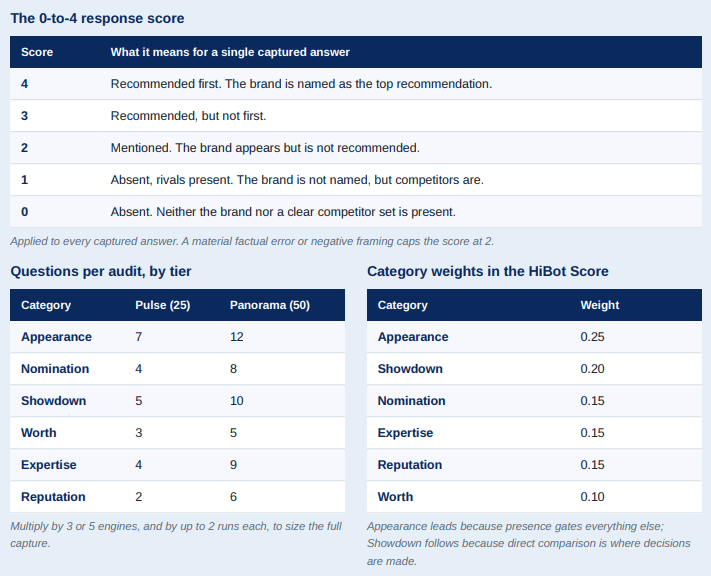
Within an audit, each trust answer is scored from 0 to 4. The accuracy cap applies sharply here: a false or materially negative claim caps the answer at 2 regardless of any positives, because a damaging untruth is not a win. Those scores roll up into a Reputation score from 0 to 100, weighted at 0.15 in the overall HiBot Score, and they feed the audit's Accuracy Rate. The full model is in How an ANSWER Audit Is Scored.
Why It Matters
Reputation is where the whole journey can be undone at the end. A customer can find you, see you nominated, watch you win the comparison, confirm your capabilities, and accept your price, then ask "are they trustworthy" and get a false or hostile answer that ends it. Because Reputation closes the loyalty loop, a poisoned answer here does not just cost one sale, it shapes how the next customer sees you before they even start.
The first step is to find out how AI characterizes your trust and standing, across the engines and markets that matter, the way a neutral customer would see it. For the full guide, see Reputation: How AI Decides Whether You Can Be Trusted, and for tactics, How to Improve Your Reputation Score.
Want to know whether AI calls your brand trustworthy or repeats something false? A HiBot audit measures your Reputation score and Accuracy Rate across multiple engines and shows you exactly what AI says about your standing. Download the ANSWER whitepaper to see the full framework, or request an AI visibility audit at hibot.com.