Nomination is the second category in HiBot's ANSWER framework, and it measures whether AI recommends your brand for a specific use case, segment, or scenario, rather than only listing you. When a customer asks "which CRM is best for a 5-person real estate team," the engine does not read out the whole category. It puts one or two brands forward for that exact job. Nomination is whether the brand it nominates is you.
This is the difference between being in the conversation and being the answer. A brand can show up in broad category lists and never be the suggested fit when the question gets specific, which is exactly when a customer is closest to choosing. Appearance gets you named. Nomination gets you recommended. For the broader framework, see Meet ANSWER.
The Customer Question behind It
Nomination answers the customer's question: "Which one is right for me?" The customer has moved past "who are the options" and is now describing their own situation, their team size, their industry, their constraint, and asking the engine to match a brand to it. The brand the engine names in response is the one that gets the next click and the demo.
In McKinsey's Consumer Decision Journey, this is active evaluation, where a customer narrows the field by fit. AI has turned that narrowing into a single recommendation. Instead of the customer working out which option suits them, the engine does the matching and hands back a name.
What the Engine Is Actually Asked
Nomination is measured with specific, scenario-level prompts that describe a real situation:
- "Which CRM is best for a 5-person real estate team?"
- "What's a good collaborative robot supplier for a mid-size factory?"
- "Recommend a payroll tool for a remote-first startup."
The test is whether the engine puts you forward as the fit for the use cases you actually serve.
What Strong and Weak Nomination Look Like
Strong Nomination looks like being actively recommended for the scenarios you are built for, named as the suggested choice when a customer describes a situation you serve well.
Weak Nomination looks like appearing in the general list but never being the pick. You are mentioned when the question is broad and quietly dropped the moment it gets specific. This is a subtle leak, because a surface check can make you feel visible. You are there in the category answer, so it looks fine, but you are never the recommendation for the jobs that are actually yours to win.
How Nomination Is Scored
Within an audit, each scenario answer is scored from 0 to 4 on how prominently you are recommended for that use case, from named as the top fit down to absent while rivals are nominated. An accuracy cap applies: a material factual error or a negative framing caps the score at 2. Those scores roll up into a Nomination score from 0 to 100, weighted at 0.15 in the overall HiBot Score.
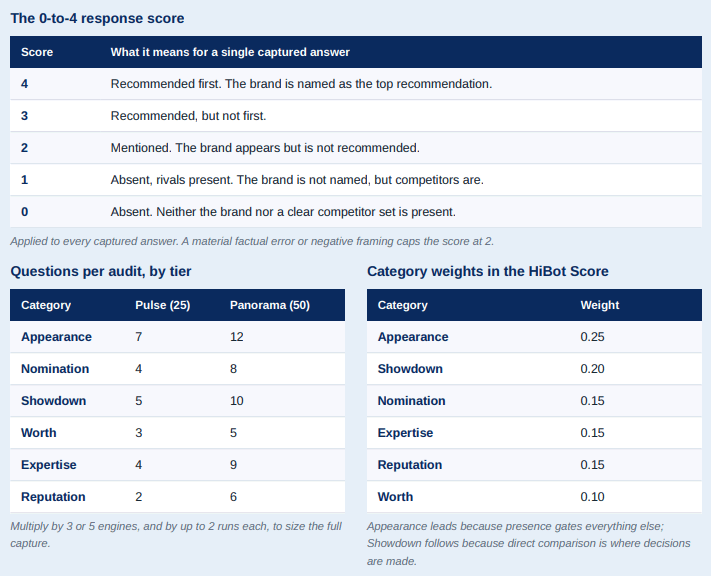
The full model is in How an ANSWER Audit Is Scored.
Why It Matters
Appearance and Nomination are often confused, and the difference matters. Appearance is presence in the category. Nomination is fit for the job. A brand can have strong Appearance and weak Nomination, which means it gets named in the broad answer and then loses every customer who describes their actual situation. Because the specific, scenario question is the higher-intent one, weak Nomination leaks customers at precisely the point of decision.
The first step is to find out whether you are nominated for the use cases you serve, across the engines and markets that matter, the way a neutral customer would see it. For the full guide, see Nomination: Getting Recommended for the Job, Not Just Listed, and for tactics, How to Improve Your Nomination Score.
Want to know whether AI recommends you for the jobs you do best? A HiBot audit measures your Nomination score across real use cases and shows you where you are the pick and where you are not. Download the ANSWER whitepaper to see the full framework, or request an AI visibility audit at hibot.com.