Customers ask AI to choose for them. "Brand A vs Brand B for enterprise, which is better" is a question ChatGPT, Perplexity, and Google's AI answers will answer directly, and the verdict often becomes the decision. Winning that moment is the job of the third ANSWER category: Showdown.
This guide covers what Showdown is, where it sits in the customer journey, how it is scored, how AI gets comparisons wrong, and how to improve. For a fast primer, start with What Is Showdown?. For the broader framework, see Meet ANSWER.
What Showdown Measures
Showdown is how your brand performs when AI weighs you head-to-head against a named competitor. It is not about whether you appear in a list, and it is not about whether your features are described accurately in isolation. It is the direct matchup: when a customer names you against a specific rival and asks the engine to pick, what does the engine say.
That makes Showdown one of the highest-stakes categories. A comparison question comes from a customer who has already narrowed the field and wants a verdict. The engine's answer lands at the point of maximum intent, which is why a loss here is so expensive and a win is so valuable.
Where Showdown Sits in the Customer Journey
The ANSWER framework is built on McKinsey's Consumer Decision Journey, and Showdown sits in active evaluation, the stage where a customer compares options and brands are added or dropped. This is the most contested part of the journey, and it is where AI now does the most work. Rather than reading two review pages and a spec comparison, the customer asks the engine to compare for them and treats the answer as the shortlist of one.
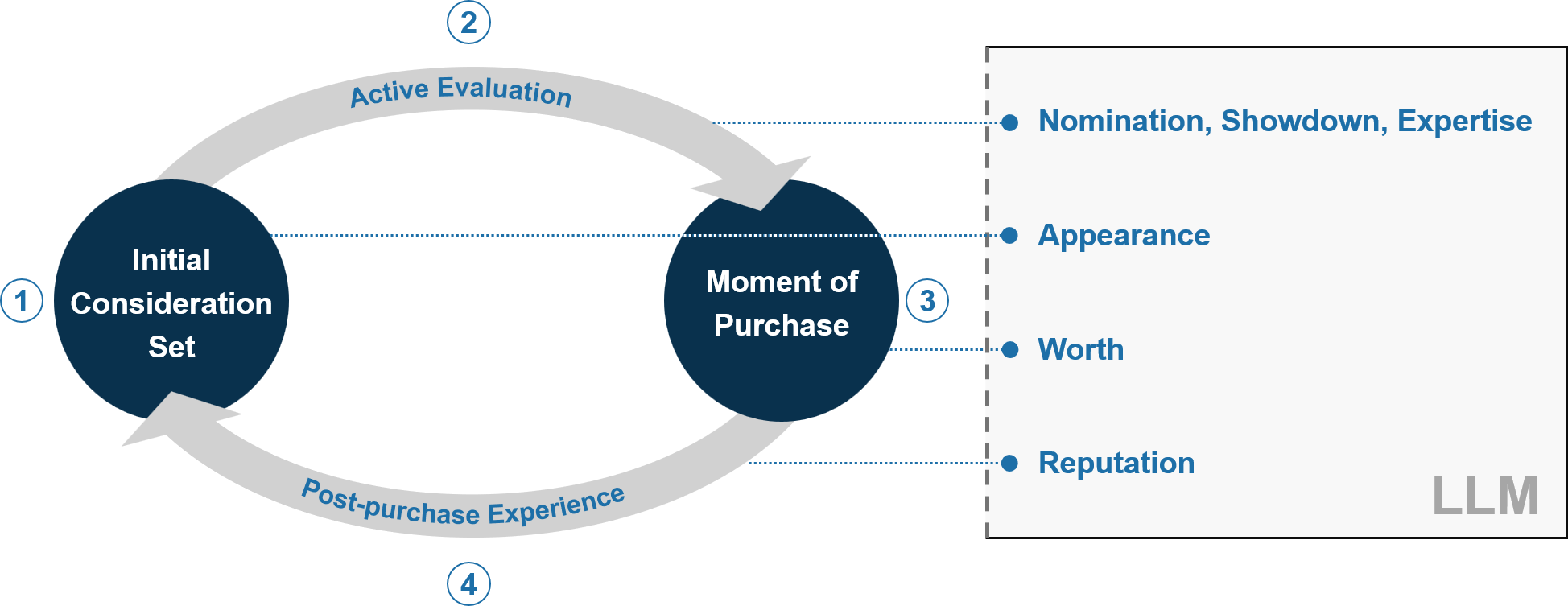
Appearance gets you into the consideration set. Showdown is what happens once you are there and the customer asks the engine to choose between you and someone specific. If you are not yet being surfaced at all, start with the Appearance guide, because you cannot win a comparison you are never part of.
What Customers Actually Ask
Showdown is measured with direct, comparative prompts that name you against a rival:
- "Brand A vs Brand B, which is better for enterprise?"
- "How does [brand] compare to [competitor] for warehouse automation?"
- "[Brand] or [competitor] for a growing SaaS company?"
The test is whether the engine represents you fairly and favorably when the customer forces a choice.
What Strong and Weak Showdown Look Like
Strong Showdown looks like winning or holding your own across your real matchups, with your genuine strengths cited accurately and tied to the use case in the question.
Weak Showdown shows up in three patterns. You lose outright, with the engine naming the competitor as the better choice. You are misrepresented, credited for the wrong strengths or saddled with weaknesses you do not have, so even a nominal win rests on a shaky description. Or you are dropped early, dismissed in a clause before the real comparison happens, which is the quietest and most damaging version because the matchup the customer asked for never actually takes place.
How AI Gets Showdown Wrong
Comparisons go wrong for understandable reasons. The engine leans on whichever side has more and better third-party comparison content, so a competitor with a strong "us vs them" page or favorable roundups can frame the matchup. The engine can carry outdated information, comparing a current version of a rival against a stale picture of you. It can miss a differentiator you never made easy to find. And it can absorb a competitor's marketing language as if it were neutral fact.
We cover the most damaging version in Dropped before the Comparison Was Fair, and we answer the specific questions brands ask in How Does ChatGPT Compare Two Competing Products?.
How Showdown Is Scored
Within a HiBot audit, each comparison answer is scored from 0 to 4 on how you fare against the named rival. An accuracy cap applies: a material factual error or a negative framing caps the score at 2, because a win built on a wrong claim is not a real win. Those response scores roll up into a Showdown score from 0 to 100.
Showdown carries the second-heaviest weight in the overall HiBot Score, at 0.20, behind only Appearance, because direct comparison is where decisions are made. The full scoring model is explained in How an ANSWER Audit Is Scored.
How to Improve Your Showdown
Improving Showdown rests on the same idea that drives the rest of AI visibility: engines synthesize their comparisons from sources. So the work is making sure the comparison content engines read is accurate, current, and clear about where you genuinely win. This is answer engine optimization (AEO), also called generative engine optimization (GEO), applied to comparisons.
In practice that means publishing honest, specific comparison and use-case content of your own, keeping your capabilities and pricing current everywhere an engine might read them, earning credible third-party comparisons and reviews, and correcting the stale or wrong claims that drag down a matchup. The full tactical guide is in How to Improve Your Showdown Score, and you can pressure-test your own matchups with Your Competitor Comparison Audit. To see the arc end to end, read Turning a Losing Comparison Around.
Measure before You Act
You cannot fix a comparison you have not seen. The first step is to find out how you fare against your real competitors, across the engines and markets that matter to you, the way a neutral customer would. A manual check on one matchup is a hint. A real baseline runs many comparison questions, across multiple engines, scored consistently.
That is what a HiBot audit delivers: your Showdown score, the matchups behind it, and a ranked list of what to fix first. Download the ANSWER whitepaper to see the full framework, or request an AI visibility audit at hibot.com.